What PSI Pressure Washer Do I Need? A Complete Buying Guide
This guide helps homeowners and DIYers choose the right PSI pressure washer for every task, from delicate wood decks to stubborn concrete stains.
What PSI Pressure Washer Do I Need? Match the Right Power to Every Job
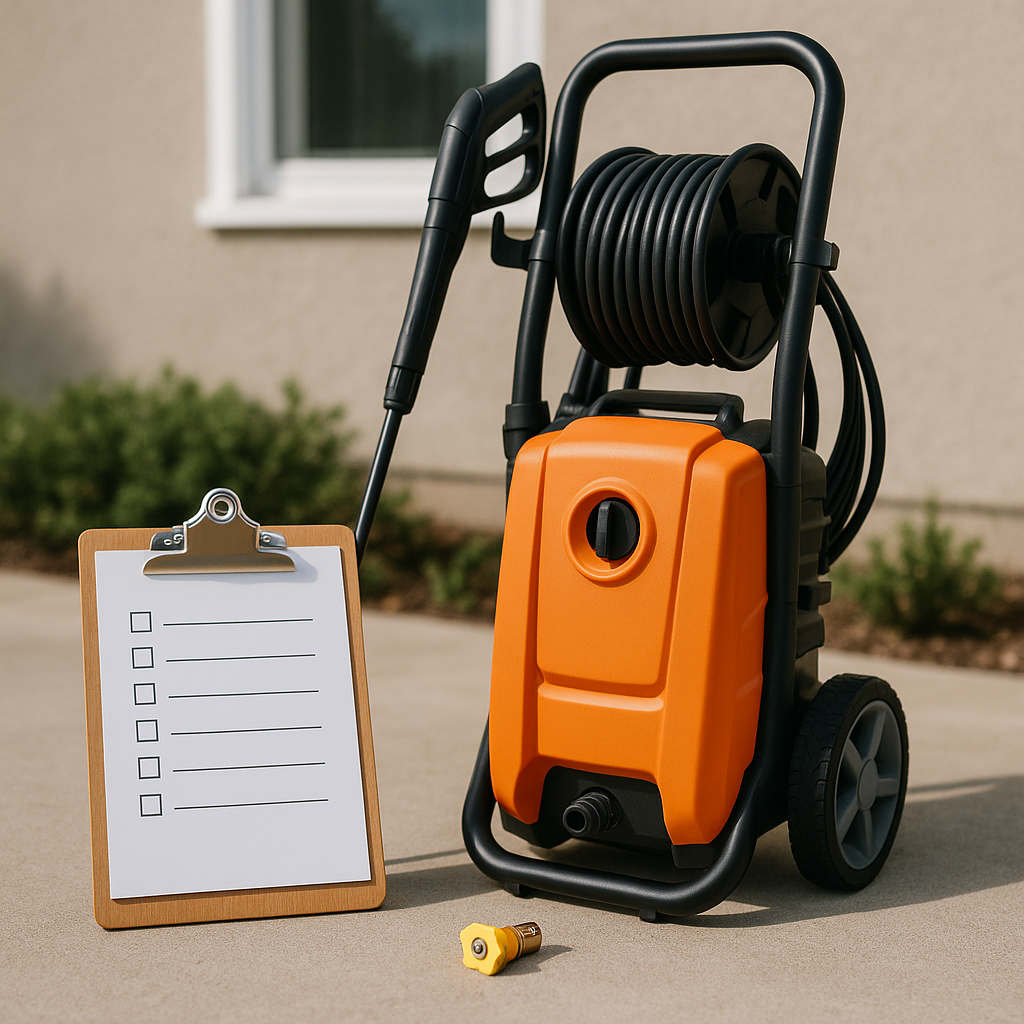
Walk into any hardware store and you'll see pressure washers ranging from 1,300 PSI to well over 4,000 PSI. Pick too low and you're scrubbing the same patch of driveway for an hour. Pick too high and you're blasting paint off your siding or splintering deck boards before you know what happened. The good news: matching the right PSI to the right job is straightforward once you know the basics, and that's exactly what this guide walks you through.
What PSI Actually Means, and Why GPM Matters Too
PSI stands for pounds per square inch, it measures the force the water stream delivers. Higher PSI means a more aggressive cut through grime, grease, and staining. But PSI alone doesn't tell the whole story. Gallons per minute (GPM) measures the volume of water flowing through the machine. Together, PSI × GPM gives you Cleaning Units (CU), which is the real measure of how much work a pressure washer can do. A 2,000 PSI machine at 2.0 GPM produces 4,000 CU. A 1,800 PSI machine at 1.2 GPM only produces 2,160 CU, noticeably less effective even though the PSI gap looks small.
PSI Ranges Explained: Light, Medium, and Heavy-Duty
Pressure washers naturally fall into three performance tiers, each suited to a different category of cleaning tasks. Understanding where your projects land will save you money and protect your surfaces.
The Job-by-Job PSI Guide: What You Actually Need
Here's where it gets practical. Every common cleaning task has a PSI sweet spot, enough force to clean effectively without risking damage to the material underneath.
Electric vs. Gas: Which Platform Fits Your PSI Needs?
Electric pressure washers max out around 2,000, 2,400 PSI in the consumer space, though some higher-end models push 2,800 PSI. They're quieter, require almost zero maintenance, and are ready to use the moment you plug them in. For most homeowners who need a machine for seasonal deck cleaning, vehicle washing, and general patio maintenance, an electric model in the 1,800, 2,400 PSI range hits every job on the list.
Gas pressure washers start around 2,600 PSI and can reach 4,200 PSI or more. They offer more mobility, no cord limiting your range, and enough raw power for oil stains, paint stripping, and larger commercial surfaces. The trade-off is real though: they require winterization, oil changes, fresh fuel with stabilizer, and carburetor maintenance. If you only pressure wash two or three times a year, that upkeep is worth considering against the extra cleaning power you'd actually use.
The Nozzle Makes or Breaks Your Results
PSI is the number on the box, but nozzle angle determines how that pressure hits the surface. A 0° red nozzle concentrates all the force into a pencil-thin stream, effective for stripping rust from metal, but it will gouge wood and dent soft surfaces almost instantly. A 15° yellow nozzle is the workhorse for heavy concrete cleaning. The 25° green nozzle is the all-purpose choice for most siding and deck work. The 40° white nozzle is best for rinsing and for delicate surfaces like car paint or screens.
Most machines also include a black soap nozzle that runs at low pressure to apply detergent, always use this one when applying cleaning solutions, never a high-pressure nozzle. You can also add a surface cleaner attachment (a spinning bar with two nozzles housed inside a plastic shroud) for driveways and flat surfaces. It cleans roughly three times faster than a handheld nozzle and eliminates the zebra-stripe pattern that single-nozzle cleaning often leaves on concrete.
Common Mistakes That Lead to Buying the Wrong Machine
The most frequent mistake is buying the highest PSI available on the assumption that more power always cleans better. It doesn't, and it actively damages wood, vinyl siding, and vehicle finishes. The second most common mistake is ignoring GPM. A 2,300 PSI machine at 1.5 GPM will leave you refilling a bucket more often and cleaning more slowly than a 2,000 PSI machine at 2.5 GPM. Finally, don't skip the nozzle check when comparing machines. Some budget models come with only two or three nozzle options, which limits versatility regardless of their PSI rating.
Is 2,000 PSI enough for a concrete driveway?
For light dirt and general grime, 2,000 PSI can work, especially with a surface cleaner attachment. However, for embedded stains, tire marks, or oil spots, you'll want 2,500, 3,200 PSI for effective results without spending hours on the same patch.
Can I use a 3,000 PSI pressure washer on my car?
It's risky. Car paint and clear coats are easily damaged above 1,900 PSI. If you only have a high-PSI machine, use a 40° nozzle, stay at least 18, 24 inches away, and keep the wand moving constantly. A dedicated low-pressure electric unit is a much safer choice for vehicles.
What PSI do I need to clean a wooden deck?
Stick to 1,500, 2,000 PSI for wood decks. Use a 25° or 40° nozzle and always spray with the grain of the wood. Pressure washing across the grain or using a 0° or 15° nozzle will raise wood fibers and leave a rough, damaged surface that's harder to stain or seal.
Do electric pressure washers have enough PSI for most home jobs?
Yes, for the vast majority of residential tasks. A quality electric pressure washer at 1,800, 2,400 PSI handles cars, siding, decks, furniture, and even most driveways. You'd only need to move to a gas-powered unit if you're dealing with heavy oil stains, large concrete areas, or paint stripping.
What's more important, PSI or GPM?
Both matter, but for most homeowners GPM is the more underappreciated spec. Higher GPM means faster rinsing, better detergent dilution, and less time on each section. Use Cleaning Units (PSI × GPM) as your real comparison number when shopping between two machines.