Best Lawn Mower for Thick Grass: How to Choose and What to Look For
A guide to choosing the right lawn mower for thick grass, covering engine power, deck design, blade type, and the key trade-offs between walk-behind and riding models.
Lawn Mower for Thick Grass: What You Actually Need to Cut Dense Turf
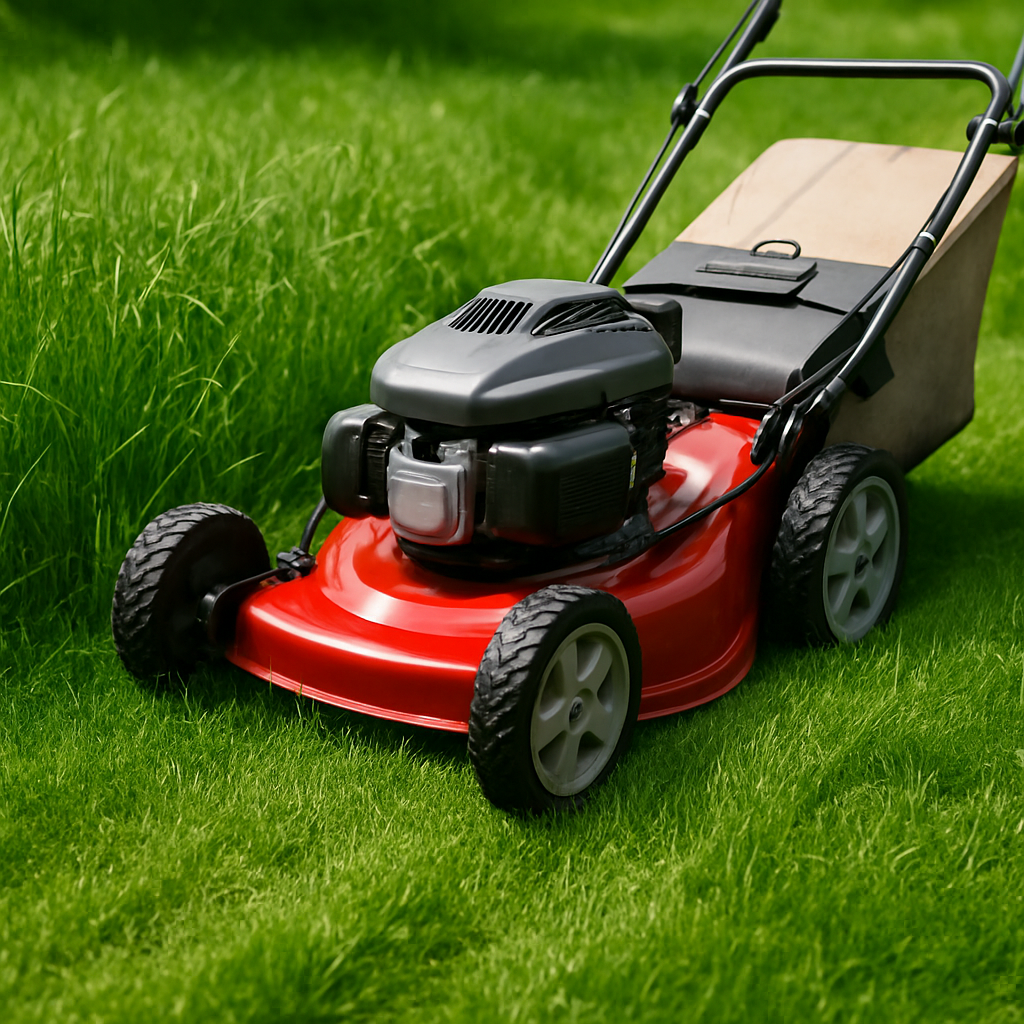
Thick grass, whether it's tall fescue, St. Augustine, zoysia, or an overgrown mixed lawn, puts a fast end to underpowered mowers. Engines bog down, decks clog, and you end up mowing the same strip three times. The good news is that the right machine handles dense turf cleanly in a single pass. This guide breaks down exactly what to look for, which machine types make sense for different yard sizes, and how to avoid spending money on specs that won't solve your problem.
Why Thick Grass Demands More From a Mower
Dense grass creates two problems at once: high blade resistance and airflow restriction under the deck. A standard residential mower runs a 140cc, 160cc engine and a single blade designed for light weekly maintenance cuts. When blade tips hit thick turf, the engine RPM drops, the blade slows, and you get torn grass instead of a clean cut. Worse, clippings pile up under the deck faster than airflow can eject them, causing clumping and eventual clogging.
Coarse grass varieties like St. Augustine and zoysia add another layer of difficulty. Their wide blades and dense root structure mean the mower has to physically push through more material per inch of travel. That's why engine displacement, blade tip speed, and deck lift design matter far more on a thick-lawn setup than they would on a thin Kentucky bluegrass lawn.
Engine Power and Displacement: The Numbers That Matter
For a walk-behind mower handling thick grass, start at 163cc and aim for 190cc or higher. Briggs & Stratton's 190cc EXi series and Honda's GCV200 are well-regarded benchmarks, both maintain RPM under load better than budget-tier engines in the 140cc, 150cc range. Self-propelled models with at least 160cc are a baseline; if your lawn is consistently dense or you're dealing with overgrown sections, 190cc, 200cc gives you meaningful headroom.
For riding mowers and zero-turns, look at gross torque alongside horsepower. A 24 HP Kawasaki FR series or a 22 HP Briggs & Stratton Professional Series engine on a zero-turn will handle thick turf on lots up to an acre without straining. Torque is what actually pushes through resistance, a high-horsepower engine with low torque figures will still bog in dense grass. Aim for 38, 42 ft-lbs of gross torque on a riding mower if your lawn is persistently thick.
Deck Size, Blade Type, and Airflow Design
A wider deck covers more ground but requires more engine power to maintain blade tip speed through thick grass. For walk-behinds, a 21-inch deck is the sweet spot, wide enough to be efficient, narrow enough that a 190cc engine handles the load. Going to a 22-inch or 30-inch deck on a walk-behind with a mid-range engine is counterproductive in thick turf; you'll lose blade speed before you gain productivity.
Blade choice has a real impact. High-lift blades create stronger airflow under the deck, standing grass up before cutting and ejecting clippings more aggressively, they're the right call for side-discharge in thick conditions. Mulching blades cut clippings multiple times, which sounds appealing, but in dense grass they restrict airflow and cause clumping. If you want to mulch a thick lawn, consider a two-in-one setup: use a high-lift blade for the main cut and switch to mulching on a follow-up pass after clippings have reduced.
Walk-Behind vs. Self-Propelled vs. Riding: Matching the Machine to Your Yard
Features Worth Paying For in Thick-Grass Conditions
All-wheel drive (AWD) self-propulsion matters if your thick grass grows on uneven or sloped terrain. Standard front-wheel drive loses traction when the rear of the mower lifts on hills. Honda's HRX217 series offers rear-wheel drive with a MicroCut twin-blade system, two blades working in a single deck, which improves clipping dispersion in dense turf without the airflow penalty of a mulching blade.
Deck wash-out ports are a practical necessity, not a luxury. After every thick-grass session, grass paste builds up on the underside of the deck. A wash port lets you attach a hose and flush it in two minutes flat. Skip this feature and you're spending 20 minutes scraping dried clippings, and a clogged deck means the next cut underperforms. Look for a steel or reinforced polymer deck over thin stamped steel if you mow thick turf regularly; the thicker construction handles impact from debris and resists warping.