How to Start a Chainsaw: A Step-by-Step Guide for Safe, Reliable Starting
A complete, practical guide covering how to start a chainsaw correctly using the cold-start and warm-start procedures, along with safety checks and common troubleshooting fixes.
How to Start a Chainsaw: Step-by-Step for Every Situation
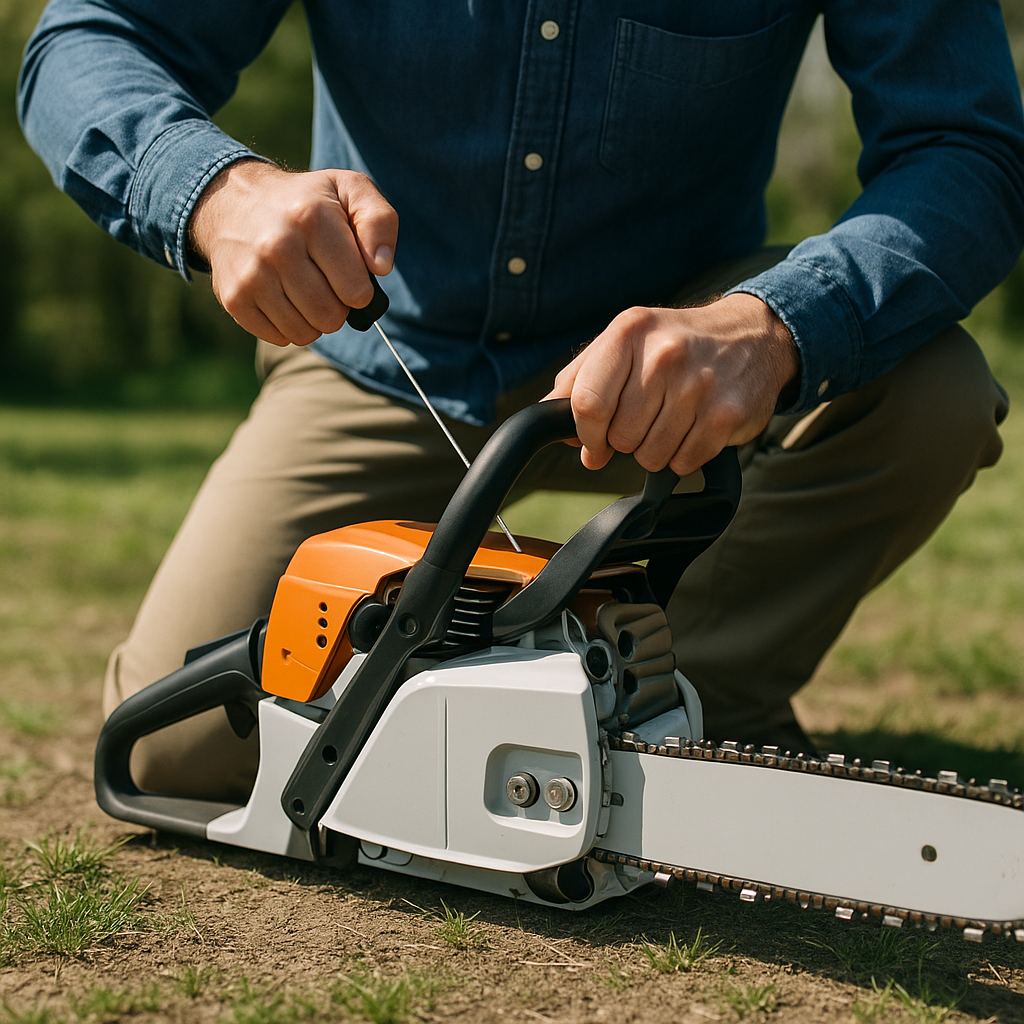
A chainsaw that won't start, or a user who doesn't know the right sequence, wastes time and creates real safety risks. Whether you're firing up a gas-powered saw for the first time this season or just picked up a new tool, knowing the correct starting procedure protects your equipment and keeps you safe. This guide walks you through everything: pre-start checks, the cold-start sequence, the warm-start shortcut, and what to do when the saw stubbornly refuses to run.
Before You Pull the Cord: Essential Safety and Pre-Start Checks
Starting a chainsaw without a quick inspection is how small problems become expensive repairs, or worse, injuries. Take sixty seconds to run through these checks every single time you use the saw, not just the first time out of the box.
How to Cold-Start a Gas Chainsaw (Engine Is Fully Cool)
A cold start applies when the engine has been sitting for more than a couple of hours, typically at the beginning of the day or after long storage. The choke needs to be fully engaged to enrich the fuel mixture enough to fire a cold cylinder. Skipping the choke is the single most common reason a saw won't start on the first several pulls.
Warm-Start Procedure (Engine Was Recently Running)
If the engine is still warm, you stopped for lunch, refueled, or took a short break, using the choke will flood the cylinder with excess fuel and make starting harder, not easier. The warm-start sequence is simpler and should get the saw running in one or two pulls.
What to Do If You've Flooded the Engine
Flooding happens when too much raw fuel saturates the cylinder, usually from repeated pulls with the choke fully closed when the saw was already trying to start, or from pumping the primer too many times. The engine will smell strongly of gasoline and refuse to fire. Don't keep yanking the cord; you'll tire yourself out and potentially damage the recoil spring.
To clear a flooded engine: set the master lever to the RUN position (no choke), hold the throttle trigger fully open, and pull the starter cord 6, 10 times at a steady pace. This draws fresh air through the cylinder and evaporates the excess fuel. After clearing, attempt a normal warm start. On some modern saws there is a dedicated 'easy start when flooded' or 'purge' procedure described in the manual, always worth knowing before you're standing in the woods frustrated.
Starting a Battery-Powered Chainsaw
Cordless chainsaws running on 40V, 60V, or 80V lithium-ion battery platforms eliminate the entire choke-and-prime ritual, which is a legitimate reason many homeowners and property owners prefer them for occasional use. The procedure is straightforward: install a fully charged battery pack until it clicks, engage the chain brake, put on your PPE, squeeze the safety lockout button (located on the top of the rear handle), then squeeze the main trigger. The saw starts instantly. There are no carburetors to flood, no pull cords to snap, and no stale fuel problems after winter storage.
The trade-off is run time, a 2.5Ah battery on a 40V saw gives roughly 30, 45 minutes of intermittent use, while a 60V saw with a 6Ah pack can handle several hours of lighter property work. For sustained all-day cutting or large-diameter logs (18 inches and above), a professional gas saw still holds the performance edge.
Common Starting Problems and How to Fix Them
Even with a perfect starting technique, a saw that has sat unused for a season or has a worn component can resist starting. Most issues trace back to one of four root causes: no spark, no fuel delivery, flooding, or a mechanical fault. Here's how to diagnose quickly.
Why does my chainsaw start but immediately die?
This almost always points to a fuel delivery issue, a dirty carburetor, clogged fuel filter, or gummed-up fuel line from old gas. It can also happen if you don't squeeze the throttle trigger right after starting to move the carburetor off the fast-idle detent. Try squeezing and releasing the trigger as soon as the engine fires.
How many times should I pull the cord before stopping?
Give the saw 8, 10 firm pulls in each phase of the cold-start sequence before re-evaluating. If it pops but won't run after 10 pulls on half choke, switch to the run position (no choke) and try a few more, it may have become partially flooded. Pulling 20+ times on full choke without a pop usually means a spark, fuel, or mechanical issue rather than a technique problem.
Is it bad to start a chainsaw without the bar and chain attached?
Most manufacturers advise against running a chainsaw without the bar and chain installed. The clutch drum and sprocket rely on the chain's tension and mass for proper operation, and some components can be damaged by unloaded high-speed spinning. Always have the bar and chain properly installed and tensioned before starting.
What fuel mix should I use in a two-stroke chainsaw?
Most modern two-stroke chainsaws (Stihl, Husqvarna, Echo, etc.) specify a 50:1 ratio, 50 parts gasoline to 1 part two-stroke oil. Older or lower-displacement saws may call for 40:1. Always check your owner's manual. Use 89-octane or higher ethanol-free gasoline when possible, and a high-quality name-brand two-stroke oil rated for air-cooled engines.
How do I store a chainsaw so it starts easily next season?
Add a quality fuel stabilizer (like Sta-Bil or Stihl MotoMix) to a fresh tank of fuel, run the engine for two minutes to circulate it, then store. Alternatively, drain the tank and carb completely by running until the saw dies from fuel starvation. Clean the air filter, check the bar oil, and store in a dry location. A properly stored saw should start on the first or second pull next season.