Best Pressure Washer for Deck Cleaning: Top Picks & Buying Guide
This guide breaks down the best pressure washers for deck cleaning, covering PSI requirements, key features, and top model comparisons to help you get professional results at home.
Best Pressure Washer for Deck Cleaning: What Actually Works
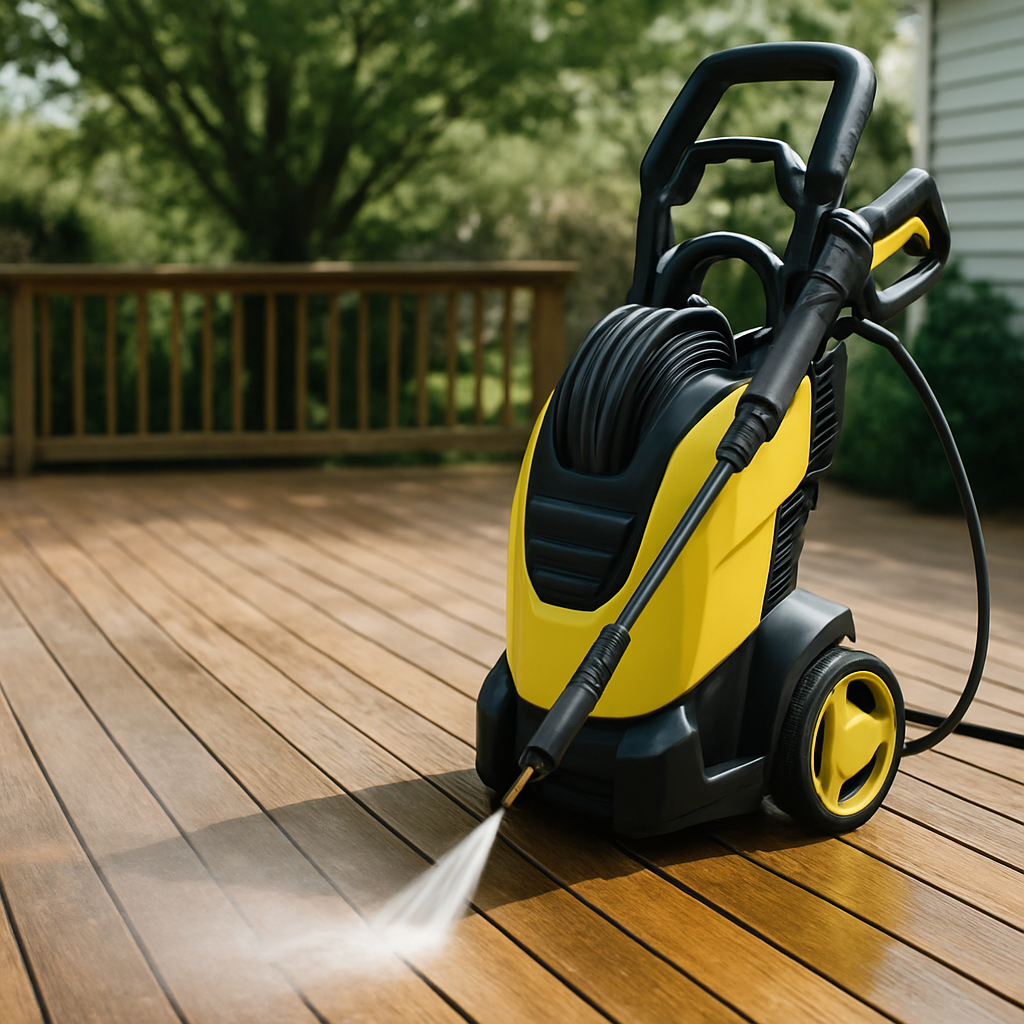
Your deck takes a beating year-round, mold, mildew, algae, and ground-in dirt can make even a well-built deck look like it's past its prime. The right pressure washer brings it back fast, but choosing the wrong one can gouge wood, strip stain, or leave streaky marks that are worse than what you started with. This guide cuts through the noise so you can pick the best pressure washer for deck cleaning based on your deck material, project size, and how often you plan to use it.
How Much PSI Do You Actually Need for a Deck?
PSI, pounds per square inch, determines how forcefully water hits a surface. For deck cleaning, the right PSI depends heavily on what your deck is made of. Softwoods like pine and cedar can splinter or raise the grain above 1,500 PSI. Hardwoods like Ipe or composite decking can handle up to 2,000, 2,500 PSI before damage becomes a concern. If you're blasting old paint or stripping stubborn algae from concrete pavers, you can go higher, but keep the nozzle at least 12 inches away.
A machine rated between 1,300 and 2,000 PSI with a flow rate (GPM) of 1.4 to 2.0 covers the sweet spot for most residential decks. GPM, gallons per minute, matters just as much as PSI. More water flow means faster rinsing and better removal of loosened debris. Look for a cleaning units (CU) value of at least 2,000 (PSI × GPM) for efficient deck work.
Electric vs. Gas Pressure Washers for Deck Cleaning
The electric vs. gas debate comes down to convenience vs. raw power. For most homeowners cleaning a residential deck once or twice a season, an electric pressure washer is the smarter, lower-maintenance choice. Gas models produce higher PSI (often 2,500, 4,000+), which is overkill for wood decking and increases the risk of surface damage. They also require oil changes, fuel storage, and more storage space. Electric units plug into a standard 120V outlet, start instantly, run quietly, and need almost no upkeep.
Top Pressure Washer Models Worth Considering
Rather than padding this list with 15 mediocre options, here are the categories that consistently produce great deck results, with the specs that matter.
For light-duty residential decks (softwood, composite): Look for an electric unit around 1,600, 1,800 PSI and 1.6 GPM. The Sun Joe SPX3001 and Ryobi RY142300 fall into this class. They're compact, easy to store, and include a 25-degree nozzle and a soap applicator, everything you need for a standard 400, 600 sq ft deck. For larger hardwood or stained decks that need more muscle: Step up to a 2,000, 2,300 PSI electric unit or a mid-range gas model like the Simpson Cleaning MSH3125 (2,800 PSI with a 25-degree tip kept far from the surface). Always verify nozzle compatibility, a rotating turbo nozzle used incorrectly on pine will tear the wood fibers.
Key Features That Make a Difference on Deck Jobs
Not all pressure washers are built equally, even at the same PSI rating. When you're comparing models, these features separate the ones that actually work well from the ones that frustrate you mid-project.
How to Pressure Wash a Deck Without Damaging It
Even the best machine will damage your deck if you use it wrong. Always start by sweeping off loose debris and moving furniture clear. Pre-treat any moldy or stained sections with a dedicated deck cleaner or oxygen bleach solution, let it dwell for 5, 10 minutes before washing. This chemical step does the heavy lifting so your pressure washer doesn't have to push as hard.
When you start washing, keep the nozzle 12, 18 inches from the surface and move in long, even strokes with the grain of the wood. Overlapping passes by about 50% prevents striping. Work from the house outward so you're always pushing dirty water away from clean areas. After washing, let the deck dry fully, at least 48 hours, before applying any sealant or stain. Rushing this step is one of the most common reasons deck finishes fail early.